题目要求
先说一下要求,app 实例能够添加中间件,并按顺序执行。示例如下:
1
2
3
4
5
6
7
8
9
10
11
12
13
14
| const app = new App();
app.use(next => {
setTimeout(() => {
next();
}, 1000)
});
app.use(next => {
console.log("hello");
next();
});
app.run();
|
- 第一个中间件是一个计时器,它将等待 1 秒后调用 next 函数。
- 第二个中间件将在第一个中间件完成后立即运行,并在控制台中打印 hello。
- 最后,调用 app.run() 将启动应用程序。由于存在两个中间件,因此调用 1s 后输出 ‘hello’。
代码实现
这是在一次面试中遇到的一道题,其实实现起来很简单,我们先以简单的方式来实现一下,直接上代码:
数组实现
1
2
3
4
5
6
7
8
9
10
11
12
13
14
15
16
17
18
19
20
21
22
23
24
| class App {
constructor() {
this.queue = [];
}
use(middleware) {
this.queue.push(middleware);
}
run() {
const runMiddleware = index => {
const middleware = this.queue[index];
if (!middleware) {
return;
}
middleware(() => runMiddleware(index + 1));
}
runMiddleware(0);
}
}
|
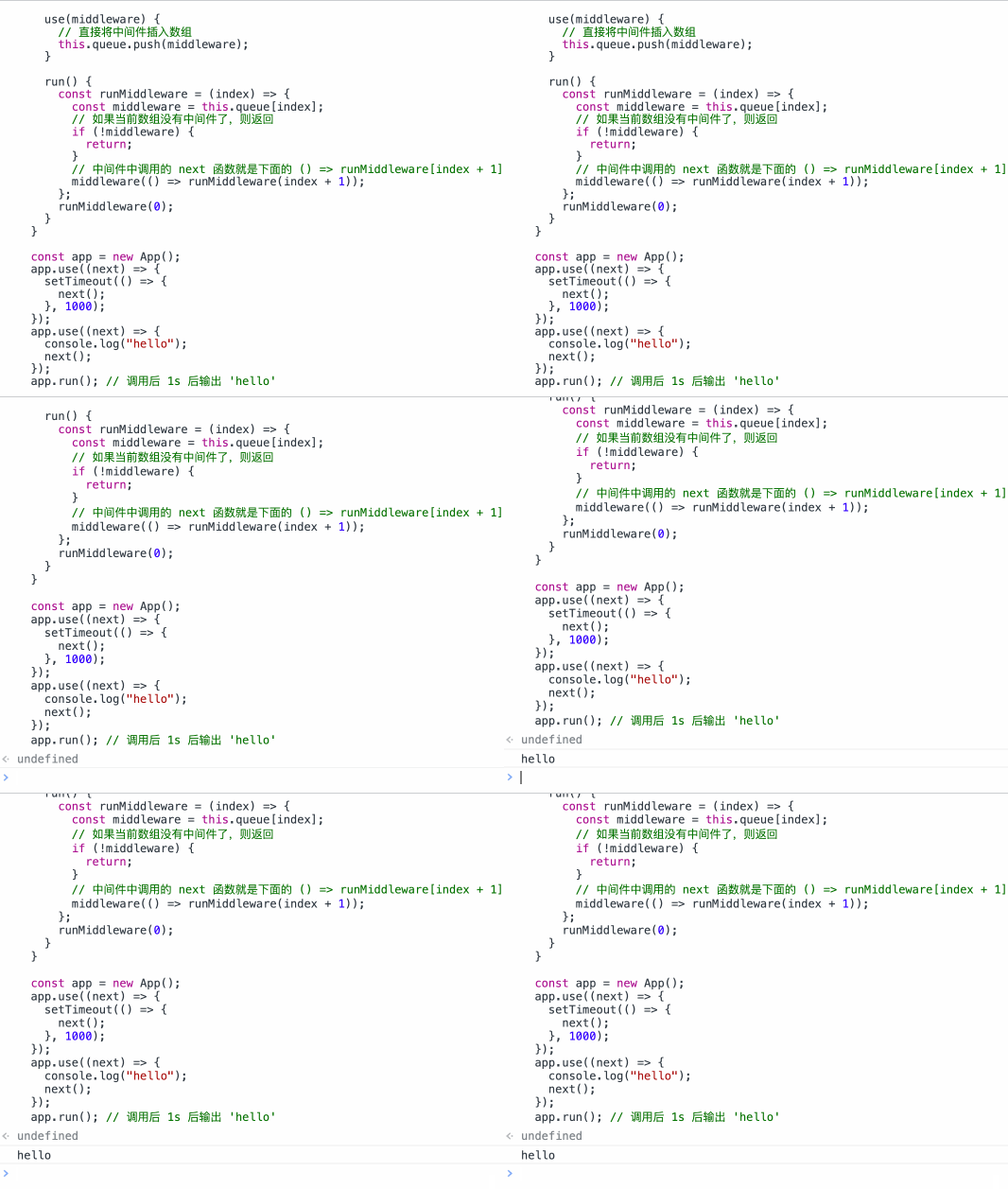
简单分析一下这里的关键点,next 函数如何注入,首先 next 函数调用没有参数,所以上面的 () => runMiddleware(index + 1) 中 () 没有参数,调用 next 函数时需要调用进行下一个中间件的执行,所以需要自调用。
我们来看一下效果:
队列实现
我们来看看另一种实现,可能通过上面的变量的命名就能够看出来我们要用队列,其实也很简单,我们只需要将 runMiddleware 中的 index 去掉,改为使用队列出队即可:
1
2
3
4
5
6
7
8
9
10
11
12
13
14
15
16
17
18
19
20
21
22
23
24
| class App {
constructor() {
this.queue = [];
}
use(middleware) {
this.queue.push(middleware);
}
run() {
const runMiddleware = () => {
const middleware = this.queue.shift();
if (!middleware) {
return;
}
middleware(() => runMiddleware());
};
runMiddleware();
}
}
|
总结
这道题的关键点在于 next 函数(即上文的 runMiddleware)如何注入以及如何通过链式调用下一个中间件。
